How to Reprogram Your Subconscious Mind
- Apr 10
- 6 min read
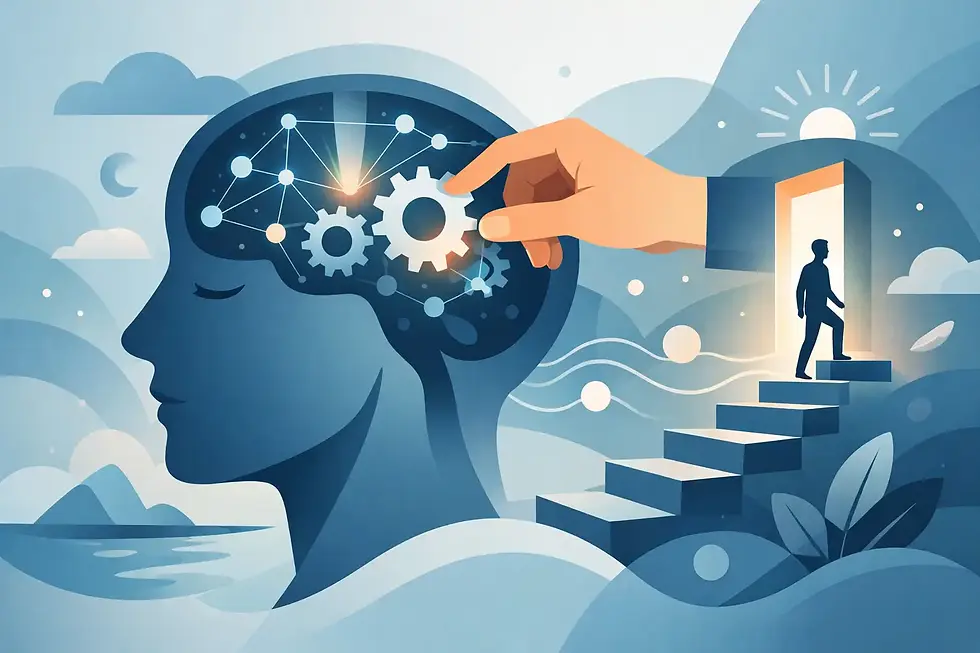
You can know exactly what you want and still sabotage it with terrifying precision. That is the real problem. Not lack of intelligence. Not lack of ambition. Not even lack of discipline. The deeper issue is that your subconscious mind is often running an old script that was written long before your adult goals, and if you want to understand how to reprogram your subconscious mind, you have to stop treating the surface behavior as the cause.
Most people try to change their life by negotiating with the conscious mind. They set intentions, make vision boards, repeat affirmations, read another book, and wonder why the same relationship patterns, money fears, creative paralysis, and self-erasing habits return on schedule. That happens because the subconscious does not respond to wishful thinking. It responds to repetition, emotional charge, identity, and perceived safety.
If your nervous system associates visibility with danger, love with abandonment, success with isolation, or rest with guilt, you will keep recreating conditions that confirm those beliefs. You will call it bad luck, timing, or burnout. But underneath it, there is programming.
## What your subconscious mind is actually doing
The subconscious mind is not some vague spiritual buzzword. It is the patterning layer beneath your active thinking. It stores emotional associations, learned beliefs, attachment dynamics, survival responses, and behavioral defaults. It is the reason you can say, "I want intimacy" while choosing emotionally unavailable people. It is the reason you can say, "I want to be seen" while procrastinating every meaningful move.
This is why mindset work alone often stalls out. If the conscious mind is making declarations but the subconscious mind is protecting an older identity, the protection will win. Almost every time.
That does not mean you are broken. It means your system is organized around adaptation. At some point, a belief or response pattern helped you survive, belong, avoid shame, or maintain connection. The problem is that old survival logic becomes destructive when it outlives the environment that created it.
## How to reprogram your subconscious mind at the root
Real change begins when you stop asking, "How do I force better habits?" and start asking, "What identity, belief, or emotional memory is this pattern protecting?"
That question shifts everything.
If you want to reprogram your subconscious mind, you need more than positive language. You need access to the structure underneath the behavior. In practice, that usually means working with four layers at once: awareness, emotional charge, repetition, and embodied evidence.
Awareness matters because you cannot change code you cannot see. But awareness alone is not transformation. Plenty of highly intelligent people can describe their trauma, name their patterns, and explain their defenses in exquisite detail while still living inside them.
Emotional charge matters because the subconscious learns through intensity. A belief wired through fear, shame, grief, or humiliation will not disappear because you replaced it with a nicer sentence. It has to be unwound, felt, and reorganized.
Repetition matters because the subconscious trusts what it experiences consistently. One breakthrough can open the door, but your system changes through reinforced evidence.
Embodied evidence matters because your subconscious is always asking one question: is this new version of me safe and real? If your body does not believe the answer is yes, change remains theoretical.
## Why affirmations fail for so many people
Affirmations are not useless. They are just wildly overprescribed.
If you have a relatively open nervous system and your inner resistance is low, repeated language can help direct attention and build momentum. But if the affirmation directly contradicts a deeply entrenched identity, it can backfire. Saying "I am worthy" while your body is flooded with the memory of rejection can create more internal friction, not less.
The issue is not the phrase. The issue is the gap between the statement and the system holding it.
That is why some people feel worse when they try standard self-help methods. They are not failing at healing. They are touching a deeper layer without the right tools to move it.
## The fastest way to change subconscious programming
The fastest route is not always the gentlest. It is the most honest.
You need to identify the pattern that keeps repeating, trace it to the belief beneath it, and then find the emotional event or identity decision that gave that belief authority. Once that structure is visible, the work becomes precise.
For example, someone with chronic creative avoidance may think the problem is procrastination. It often is not. The real code may be: if I fully express myself, I will be judged, envied, exposed, or abandoned. Someone who keeps under-earning may tell themselves they need better strategy. Sometimes they do. But often the deeper code is: success will make me unsafe, separate me from my family, or force me to become a person I do not trust.
This is why subconscious change can feel spiritual and surgical at the same time. You are not just replacing a thought. You are dismantling a hidden contract.
Methods like hypnosis, somatic work, trauma-informed visualization, deep meditation, and [intuitive healing](https://www.andysway.com/services-deepdive) can be powerful because they help bypass the argumentative conscious mind and reach the emotional architecture underneath. Therapy can help too, but it depends on the approach. If you are only analyzing the pattern without disrupting it, you may gain insight while staying stuck.
## A practical process for reprogramming
Start with one pattern, not your entire life. Pick the recurring issue that carries the most heat. Usually that is the one that keeps costing you energy, intimacy, money, or momentum.
Then write down the behavior in plain language. Not a polished explanation. The raw truth. "I disappear when things get real." "I delay the work that matters most." "I choose people I have to earn." Precision matters because vague self-awareness keeps people spinning.
Next, ask what this pattern helps you avoid. Does it protect you from rejection, failure, envy, conflict, exposure, grief, or responsibility? The subconscious repeats what it believes is protective, even when the protection is expensive.
Then ask where you learned that. You may not get a full memory right away, but most people can feel the age or atmosphere of the original imprint. Childhood dynamics, family systems, early heartbreak, humiliation, spiritual conditioning, or environments where authentic expression was punished often sit underneath adult blocks.
After that, interrupt the old coding with a new emotional experience, not just a new idea. This can happen through [guided hypnosis](https://www.andysway.com/pastlife), somatic release, visualization that engages the body, or deep therapeutic work that changes the felt sense of the memory. The goal is not to pretend the past did not happen. The goal is to remove its authority over the present.
Finally, reinforce the new identity with action. Small, specific, repeated action. If your new code is "it is safe to be seen," then being seen has to become a lived experience, not a private mantra. That may mean posting the work, naming the desire, setting the boundary, charging the rate, leaving the dead relationship, or tolerating the discomfort of not abandoning yourself.
## How to know the change is real
Real subconscious change is measurable.
You stop having to use force for things that used to exhaust you. The old trigger loses intensity. The familiar sabotage window closes faster. You make different choices without a dramatic internal debate. Opportunities that once felt threatening start to feel normal.
This does not mean you become frictionless or spiritually perfected. That fantasy keeps people trapped too. It means your baseline changes. You become less available for old loops because your identity is no longer organized around them.
There is also a trade-off worth naming. Reprogramming your subconscious mind can disrupt relationships, careers, and environments that depended on your old self. Growth is not always immediately comfortable. Sometimes the symptom was maintaining a false peace. When the code changes, your standards change with it.
## When you cannot do it alone
Some patterns are too layered to unwind through journaling and self-observation. Especially if the block is tied to trauma, dissociation, chronic shame, or a lifelong split between who you are and who you learned to be.
That is where skilled support matters. Not endless processing. Not being managed into functionality. Actual root-cause work that identifies the hidden structure and changes it.
For people who are serious about rapid transformation, this is the difference between coping more elegantly and actually becoming someone new. [Andy Sway's work](https://www.andysway.com/about) sits in that category because it is built for people who are done circling their patterns and ready to confront the code beneath them.
If you have been trying to think your way out of a pattern that is clearly living below thought, take that as information. Your subconscious is not your enemy. It is carrying instructions. Change the instructions, and your reality starts reorganizing around who you really are.


Comments